Pediatric Orthopedics in Indore – Child Bone and Deformity Correction at RK Hospital
Children grow and develop rapidly, and their bones, joints and muscles undergo important changes throughout childhood. Sometimes, congenital conditions, developmental differences or injuries can affect a child's posture, walking pattern, limb alignment or movement.
Pediatric orthopedics focuses on identifying and managing bone, joint and musculoskeletal conditions in infants, children and adolescents.
If you are looking for a pediatric orthopedic hospital in Indore, RK Hospital & Research Center provides child bone consultation, children's physiotherapy, bone deformity correction and growth plate fracture management.
What Is Pediatric Orthopedics?
Pediatric orthopedics is a specialized area of orthopedic care focused on bone, joint, muscle and limb conditions in children.
A child's bones are still growing, which means some conditions need a different approach from those seen in adults. Early evaluation can help doctors understand whether a condition is part of normal development or requires medical treatment.
Depending on the diagnosis, treatment may include observation, braces, physiotherapy, casting or surgery.
Common Pediatric Orthopedic Conditions
1. Clubfoot
Clubfoot is a congenital condition in which a baby's foot is turned inward and downward. It can affect one or both feet.
Early treatment is important. The Ponseti method, which commonly involves gentle manipulation and serial casting, is a widely used treatment approach. Some children may also need a minor procedure or further treatment based on their condition.
2. Bowlegs
Bowlegs is a condition in which the legs curve outward at the knees, leaving a visible gap between the knees when the ankles are together.
Some degree of bowing can be normal in young children and often improves naturally as they grow. However, persistent, severe or uneven bowing should be evaluated by an orthopedic specialist.
3. Knock Knees
Knock knees occur when the knees angle inward and come closer together while the ankles remain apart.
This can be a normal stage of childhood growth in many children. If the condition is severe, painful, uneven or continues beyond the expected age, medical evaluation may be required.
4. Growth Plate Injuries
Growth plates are areas of developing cartilage near the ends of children's long bones. They help bones grow in length.
Injuries to growth plates may occur due to falls, sports activities or accidents. Proper diagnosis and follow-up are important because some growth plate injuries can affect future bone growth.
5. Congenital Bone and Limb Deformities
Some children are born with differences in the shape, length or alignment of their bones and limbs.
Depending on the condition, the doctor may recommend observation, physiotherapy, bracing or corrective treatment.
6. Childhood Fractures
Children may experience fractures while playing, participating in sports or following accidental falls.
Treatment depends on the child's age, fracture location, alignment and whether the growth plate is involved.
Signs That Your Child May Need an Orthopedic Consultation
Parents should consider an orthopedic evaluation if they notice:
- Unusual bending or alignment of the legs
- One foot turning inward or outward significantly
- Difficulty walking or frequent falls
- Limping or persistent pain
- Unequal leg lengths
- Swelling or pain after an injury
- Limited movement in a joint
- Visible changes in limb shape
- Difficulty participating in normal physical activities
Not every difference in a child's walking or leg shape indicates a medical problem. A specialist can help distinguish normal developmental changes from conditions that need treatment.
Why Is Early Evaluation Important?
A child's bones and joints are still developing. Identifying certain orthopedic conditions early can help doctors plan appropriate treatment and monitor growth.
Early evaluation may help:
- Identify congenital or developmental bone conditions
- Assess limb alignment and walking patterns
- Detect growth plate injuries
- Monitor changes as the child grows
- Plan suitable physiotherapy or corrective treatment
- Reduce the risk of certain long-term functional problems
Treatment timing depends on the child's age, diagnosis and severity of the condition.
How Are Pediatric Orthopedic Conditions Diagnosed?
The doctor reviews the child's medical history, development, symptoms and physical condition.
Depending on the suspected problem, investigations may include:
- Physical examination
- Assessment of walking and posture
- Limb alignment evaluation
- X-rays to assess bones and growth plates
- Additional imaging when medically required
The doctor determines which tests are appropriate for the individual child.
Pediatric Orthopedic Treatment Options
Treatment is selected according to the child's age, growth stage and diagnosis.
1. Observation and Regular Monitoring
Some childhood conditions improve naturally with growth. In such cases, doctors may recommend periodic check-ups to monitor development.
2. Casting and Bracing
Casts, braces or specially designed supports may be used to guide treatment for selected bone and joint conditions.
3. Children's Physiotherapy
Physiotherapy may help improve movement, strength, flexibility, balance and coordination. The therapy plan is tailored to the child's condition and age.
4. Deformity Correction
Some severe or persistent bone deformities may require corrective procedures. Surgical decisions depend on the type of deformity, growth stage and overall health of the child.
5. Growth Plate Injury Management
Growth plate injuries need appropriate assessment and follow-up. Treatment may include immobilization or surgery depending on the fracture and bone alignment.
Pediatric Orthopedics at RK Hospital, Indore
RK Hospital & Research Center lists Pediatric Orthopedics and child bone care among its specialized services.
The hospital's listed services include:
- Child bone consultation
- Children's physiotherapy
- Congenital bone deformity assessment
- Developmental deformity correction
- Clubfoot care
- Bowlegs evaluation and correction
- Growth plate fracture management
Parents can contact the hospital to enquire about pediatric orthopedic consultation, the appropriate specialist and available treatment options.
Children's Physiotherapy and Rehabilitation
Physiotherapy can be an important part of care for children with selected orthopedic conditions.
A personalized rehabilitation program may focus on:
- Improving muscle strength
- Supporting balance and coordination
- Improving joint movement
- Building walking and movement skills
- Supporting recovery after injuries or surgery
- Helping children return to age-appropriate activities
Exercises should always be selected according to the child's diagnosis and supervised or guided by qualified professionals.
When Should Parents Seek Immediate Medical Attention?
Seek prompt medical evaluation if your child has:
- Severe pain after a fall or accident
- Visible limb deformity
- Inability to stand or bear weight
- Significant swelling
- An open wound associated with an injury
- Numbness or unusual colour changes in fingers or toes
- Suspected fracture or growth plate injury
Avoid trying to straighten an injured limb at home.
Consult RK Hospital for Pediatric Orthopedic Care in Indore
If you notice unusual bone alignment, walking difficulties, recurring limb pain or a possible growth-related orthopedic problem, an appropriate medical evaluation can help identify the cause.
RK Hospital & Research Center is located at Navlakha, Indore, and lists pediatric orthopedic services covering child bone consultation, physiotherapy and deformity correction.
**Hospital:** RK Hospital & Research Center
**Department:** Pediatric Orthopedics
**Address:** 1 Prakash Nagar Square, Nemawar Road, Navlakha, Indore, Madhya Pradesh 452010
**Phone:** +91 93994 84434
**Website:** https://rkhospitalindore.in/
Contact the hospital to confirm the pediatric orthopedic consultation schedule and availability of the relevant specialist.
Conclusion
Children's bone and joint conditions need attention that considers their age, growth and development. From clubfoot and bowlegs to growth plate injuries and childhood fractures, timely evaluation can help parents understand the condition and explore suitable treatment options.
For pediatric orthopedic consultation and bone deformity care in Indore, contact RK Hospital & Research Center.
**Medical Disclaimer:** This article is for general educational purposes only. It does not replace professional medical diagnosis or treatment. A child's treatment plan should always be based on an individual examination by a qualified healthcare professional.
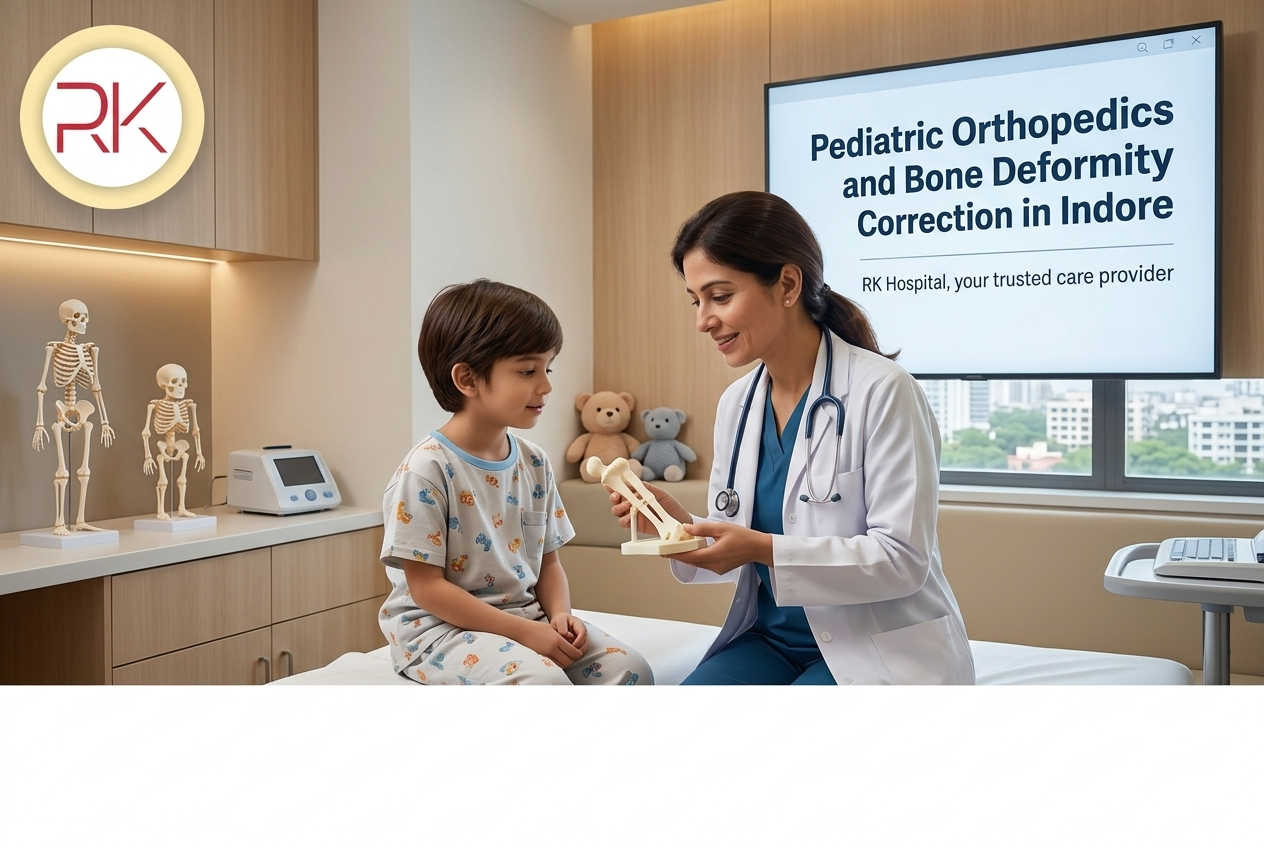
Looking for pediatric orthopedic care in Indore? RK Hospital provides child bone consultations, children's physiotherapy, clubfoot and bowlegs assessment, bone deformity correction and growth plate fracture management.
Children may experience bone, joint and limb conditions due to congenital differences, growth-related changes or injuries. Pediatric orthopedics focuses on evaluating and managing these conditions during childhood. RK Hospital & Research Center, Indore, lists child bone consultation, children's physiotherapy, congenital and developmental deformity correction, clubfoot, bowlegs and growth plate fracture management among its pediatric orthopedic services.
Children may experience bone, joint and limb conditions due to congenital differences, growth-related changes or injuries. Pediatric orthopedics focuses on evaluating and managing these conditions during childhood. RK Hospital & Research Center, Indore, lists child bone consultation, children's physiotherapy, congenital and developmental deformity correction, clubfoot, bowlegs and growth plate fracture management among its pediatric orthopedic services.
Share This Article: