PCOS and PCOD Treatment in Indore – Symptoms, Causes and Care at RK Hospital
Irregular periods, unexpected weight changes, acne, unwanted facial hair and difficulty conceiving can sometimes be related to hormonal imbalance. One common condition associated with these symptoms is Polycystic Ovary Syndrome (PCOS), which is also commonly referred to as PCOD.
PCOS can affect women during their reproductive years and may influence menstrual health, metabolism, skin, hair growth and fertility. Understanding the symptoms and seeking timely medical advice can help women manage the condition.
If you are looking for PCOS or PCOD consultation in Indore, RK Hospital & Research Center provides Obstetrics and Gynaecology services under the guidance of Dr. Neeti Gupta (MBBS, DNB – Obstetrics & Gynaecology).
What Is PCOS or PCOD?
PCOS stands for Polycystic Ovary Syndrome. It is a hormonal and metabolic condition that can affect how the ovaries function.
Women with PCOS may experience irregular ovulation, higher levels of certain androgens (hormones commonly associated with male characteristics) and changes in the appearance of the ovaries on ultrasound.
PCOD is a commonly used term for a similar condition in everyday conversation. PCOS is the widely used medical term.
It is important to understand that not every woman with PCOS has ovarian cysts, and an ultrasound alone cannot confirm the diagnosis.
Common Symptoms of PCOS and PCOD
Symptoms can differ from one woman to another. Some women experience several symptoms, while others may notice only one or two.
1. Irregular Menstrual Periods
Periods may occur less frequently, become unpredictable or sometimes stop for several months. This can happen when ovulation is irregular.
2. Acne and Oily Skin
Hormonal changes may contribute to persistent acne, particularly around the face, jawline, chest and back.
3. Excess Facial or Body Hair
Some women may experience increased hair growth on the chin, upper lip, chest or abdomen due to higher androgen levels.
4. Weight Gain or Difficulty Managing Weight
PCOS may be associated with insulin resistance and metabolic changes, which can make weight management challenging for some women.
5. Hair Thinning
Some women may notice thinning of scalp hair or a pattern of hair loss related to hormonal changes.
6. Difficulty Getting Pregnant
Irregular or absent ovulation can make conception more difficult. However, many women with PCOS can become pregnant with appropriate medical guidance.
What Causes PCOS?
The exact cause of PCOS is not fully understood. Several factors may contribute to its development.
Hormonal Imbalance
Higher androgen levels can affect normal ovulation and contribute to acne or excess facial and body hair.
Insulin Resistance
Some women with PCOS have insulin resistance. This means the body does not respond to insulin as effectively as it should, and the pancreas may produce more insulin to compensate.
Genetic Factors
PCOS can run in families. Having a close family member with PCOS may increase the likelihood of developing the condition.
Metabolic Factors
Changes in weight, insulin regulation and other metabolic factors can influence symptoms and long-term health.
PCOS is not caused simply by eating certain foods or by a lack of exercise. It is a complex condition that needs individual assessment.
How Is PCOS Diagnosed?
There is no single test that confirms PCOS in every patient. A gynaecologist evaluates symptoms, medical history and appropriate investigations.
Depending on the individual case, assessment may include:
- Menstrual and reproductive health history
- Physical examination
- Hormonal blood tests
- Blood sugar and metabolic assessment
- Cholesterol and lipid profile
- Pelvic ultrasound when indicated
- Tests to rule out other conditions that can cause similar symptoms
An ultrasound is not always necessary for diagnosis, and the presence of ovarian cyst-like follicles alone does not automatically mean a woman has PCOS.
PCOS and Its Possible Health Effects
PCOS is not only related to menstrual irregularities. If symptoms are not appropriately managed, some women may have an increased risk of other health concerns.
These may include:
- Insulin resistance
- Type 2 diabetes
- High cholesterol
- High blood pressure
- Fertility difficulties
- Endometrial problems associated with prolonged absence of periods
- Anxiety, low mood or emotional distress
Regular medical follow-up can help assess individual risks and guide appropriate care.
PCOS and Pregnancy – Can Women with PCOS Conceive?
Yes. Many women with PCOS can conceive naturally or with medical support.
However, irregular ovulation may make it harder to predict fertile days and achieve pregnancy.
A gynaecologist may recommend:
- Ovulation assessment
- Lifestyle and metabolic evaluation
- Treatment to support ovulation when appropriate
- Fertility investigations for both partners
- Pregnancy planning and follow-up
Treatment depends on the patient's age, symptoms, medical history and fertility goals.
PCOS and PCOD Treatment Options
There is no single treatment that works for every woman with PCOS. The approach depends on symptoms, metabolic health and whether pregnancy is being planned.
1. Lifestyle and Nutrition Management
A balanced eating pattern, regular physical activity, adequate sleep and sustainable weight management can help improve metabolic health and may support more regular menstrual cycles.
2. Medicines for Menstrual Irregularities
A doctor may prescribe hormonal medication or other treatments to regulate periods and protect the uterine lining, depending on the patient's condition.
3. Treatment for Acne and Excess Hair Growth
Specific medicines and dermatological treatments may help manage acne and unwanted hair growth. Treatment should be selected by a qualified professional.
4. Insulin Resistance Management
For selected patients, a doctor may recommend medication such as metformin along with lifestyle measures, depending on metabolic assessment.
5. Fertility and Ovulation Treatment
Women planning pregnancy may need evaluation and treatment to support ovulation. The choice of treatment depends on individual fertility assessment.
Do not start hormonal medicines, supplements or fertility drugs without medical advice.
When Should You Consult a Gynaecologist?
Consider booking a consultation if you experience:
- Periods that are repeatedly irregular
- No menstrual period for several months
- Persistent acne or excess facial hair
- Unexplained changes in weight
- Hair thinning
- Difficulty conceiving
- Symptoms that are affecting your daily life or emotional well-being
If you have very heavy bleeding, severe pelvic pain or fainting, seek prompt medical assessment.
PCOS and Women's Healthcare at RK Hospital, Indore
RK Hospital & Research Center offers Obstetrics and Gynaecology services under Dr. Neeti Gupta (MBBS, DNB – Obstetrics & Gynaecology).
The hospital's listed women's healthcare services include:
- Gynaecological consultation
- Infertility evaluation and treatment
- High-risk pregnancy care
- Maternity care
- Painless delivery consultation
- Management of women's health conditions
Women experiencing symptoms associated with PCOS or PCOD can contact the hospital to enquire about a gynaecology consultation and appropriate evaluation.
Why Early PCOS Evaluation Is Important
PCOS symptoms can change over time. Some women may initially experience irregular periods, while others may first notice acne, excess hair growth or difficulty conceiving.
An early medical assessment helps identify the cause of symptoms and understand whether hormonal, metabolic or fertility-related care is required.
A personalized treatment plan and regular follow-up can help women manage symptoms and support long-term health.
Consult Dr. Neeti Gupta at RK Hospital, Indore
If you are experiencing irregular periods, hormonal symptoms or fertility-related concerns, consult a qualified gynaecologist for an individual assessment.
Dr. Neeti Gupta (MBBS, DNB – Obstetrics & Gynaecology) provides women's healthcare, maternity care and infertility consultation at RK Hospital & Research Center, Indore.
**Hospital:** RK Hospital & Research Center
**Doctor:** Dr. Neeti Gupta
**Qualification:** MBBS, DNB (Obstetrics & Gynaecology)
**Address:** 1 Prakash Nagar Square, Nemawar Road, Navlakha, Indore, Madhya Pradesh 452010
**Phone:** +91 93994 84434
**Website:** https://rkhospitalindore.in/
Conclusion
PCOS and PCOD can affect menstrual health, hormones, metabolism, skin and fertility. Although the symptoms may vary, the condition can often be managed with appropriate medical guidance, lifestyle changes and treatment based on individual needs.
For PCOS, PCOD and women's healthcare consultation in Indore, contact Dr. Neeti Gupta at RK Hospital & Research Center.
**Medical Disclaimer:** This article is for general educational purposes only and does not replace professional medical advice, diagnosis or treatment. PCOS diagnosis and treatment must be based on an individual's symptoms, examination and appropriate investigations.
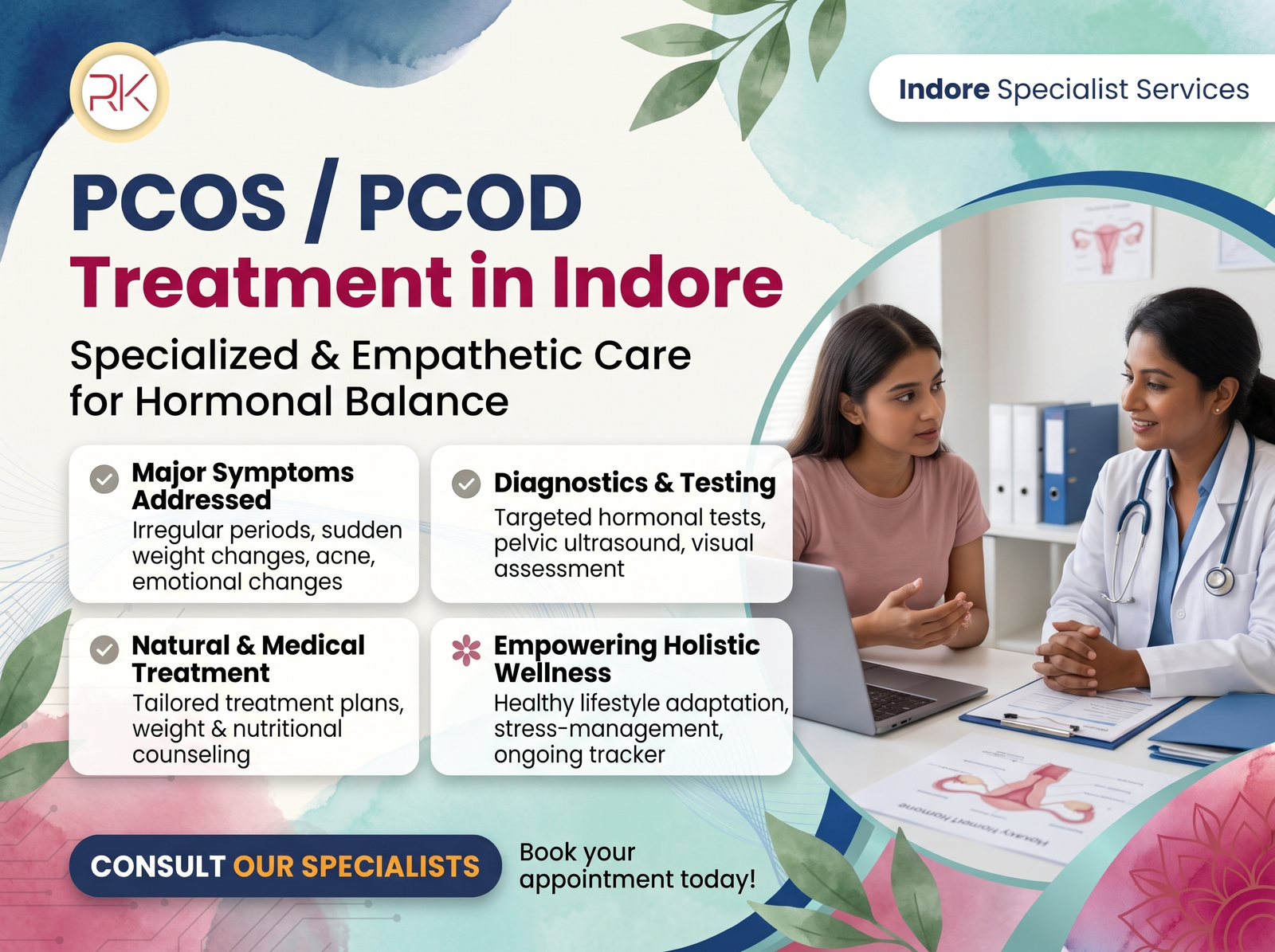
Experiencing irregular periods, acne, unwanted facial hair or weight changes? Learn about PCOS and PCOD symptoms, diagnosis and treatment options. Consult Dr. Neeti Gupta at RK Hospital, Indore, for women's healthcare.
PCOS (Polycystic Ovary Syndrome), also commonly called PCOD, is a hormonal and metabolic condition that can affect menstrual cycles, skin, hair growth and fertility. Symptoms vary from woman to woman, and early medical evaluation can help identify the condition and manage its effects. At RK Hospital & Research Center, Indore, Dr. Neeti Gupta (MBBS, DNB – Obstetrics & Gynaecology) provides women's healthcare and infertility consultation.
PCOS (Polycystic Ovary Syndrome), also commonly called PCOD, is a hormonal and metabolic condition that can affect menstrual cycles, skin, hair growth and fertility. Symptoms vary from woman to woman, and early medical evaluation can help identify the condition and manage its effects. At RK Hospital & Research Center, Indore, Dr. Neeti Gupta (MBBS, DNB – Obstetrics & Gynaecology) provides women's healthcare and infertility consultation.
Share This Article: